

Social Worker's Daily Routine during the Pandemic: Opportunities in the Crisis
To me, the biggest impact of COVID-19 is "wearing the mask". I had never worn a mask before the pandemic, so it was very difficult for me to adapt to it at first. I was eager to breathe fresh and pure air every day. However, I accepted it faster than I thought, because of fear. When various news media have been overwhelmingly warning to "wear the mask" and the number of new cases has been soaring dramatically, there are full of insecurities and uncertainties around everyone. Everything seems to warn you that if you don't protect yourself, your life will be threatened at any time.
I’m Huang Simin from Nanning City, Guangxi Zhuang Minority Autonomous Region of South China. I’m one of the seven members for Guangxi Children’s Development Project Team of World Vision. On the eve of the Spring Festival in 2020, COVID-19 began to spread across the country. As the epidemic spread rapidly, Guangxi government launched Level I (the highest level) response to major public health emergency on 24th January, calling for a reduction in public gatherings and advising people to be quarantined at home. In Nanning City, there were about 50 confirmed cases in the most serious situation. Therefore, I worked from home from 10th February to 16th March. As the pandemic has been effectively controlled in China, I has returned to office and restarted my new normal life since from 16th March.
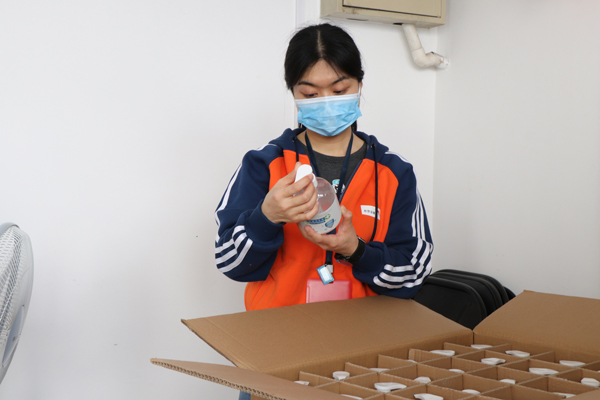
▲Author is checking the quality of protective gear provided by World Vision.
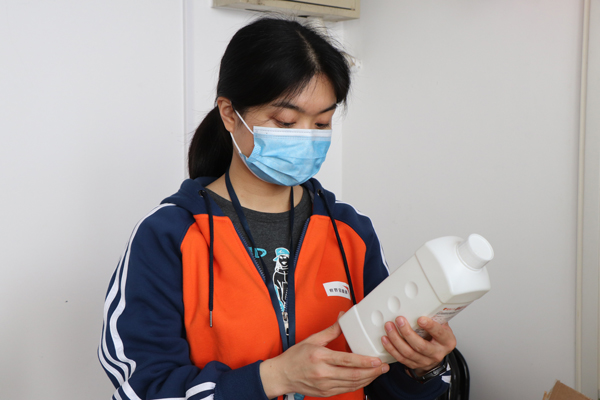
▲Author is checking the quality of protective gear provided by World Vision.
As for work, the pandemic has had a significant impact on the progress of our project: the project has been obstructed, relevant activities have been suspended, daily face-to-face work mode of the team has changed, the cost of work communication has increased, etc. In this situation, our project staff are also thinking, what else can we do except for being forced to accept it? What else should be done? What action can we do proactively?
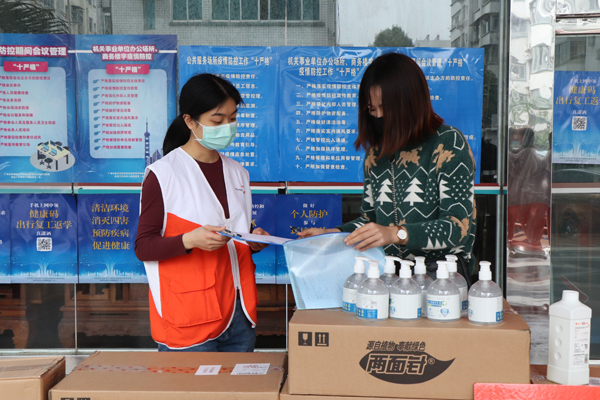
▲On behalf of World Vision, Huang Simin handed over the protective gear to the partner.
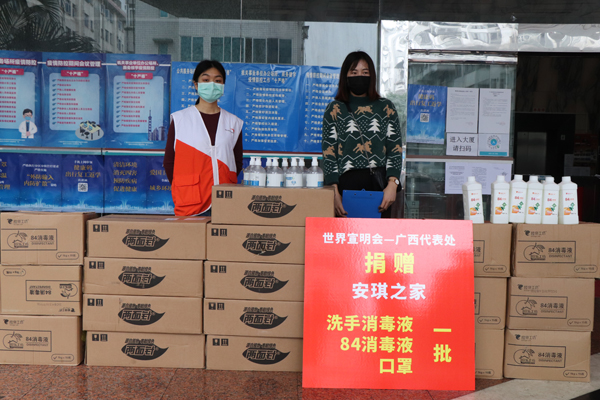
▲On behalf of World Vision, Huang Simin handed over the protective gear to the partner.
Crisis is also the opportunity. The outbreak of the pandemic has made people realize the importance of Public Health Security. Some health and hygiene habits that people used to ignore have been giving people the wake-up call, such as wearing masks, washing hands, opening windows for ventilation, social distancing, eating separately, using the serving chopsticks, etc. When it comes to the disabled children project I serve, we have been committed to promoting and advocating the protection and health of children. We have also taken the pandemic as an opportunity to reach a consensus with our partners, hoping that they can integrate the health security protection and education into staff's health education services and the daily work mechanisms. For example, some activities have been objectively restricted, such as the capability training of caregivers and children's social practices that are hosted by partners. To prevent disabled children from COVID-19, the project team has been closely communicating with the partners online. According to the pandemic prevention work, we have adjusted the implementation of the rehabilitation, nursing and education plan in order to ensure the non-stop rehabilitation and education services for children and jointly explore the childcare service mode during the pandemic with partners. After continuous exploration, optimization and consensus, partners have maintained the normal study and life of disabled children and balanced the participation of games and rehabilitation. In addition, partners have integrated the children's safety education, self-protection and life education into daily life and teaching. They will gradually develop the ongoing education service of children's health and self-protection to the regular health education curriculum to help children learn the pandemic prevention knowledge and skills and help children form good and healthy hygiene habits.
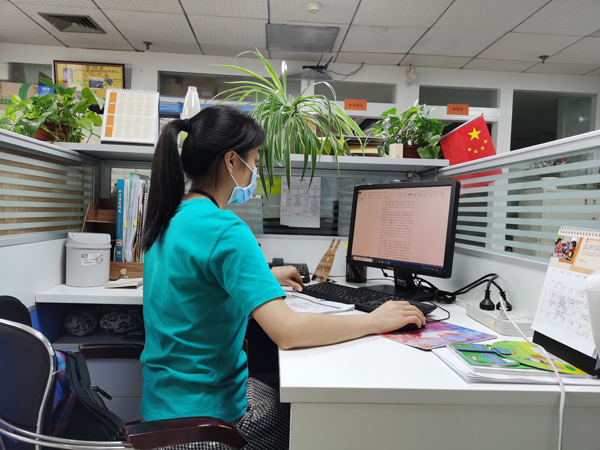
▲Huang Simin returns to office and starts her new normal life.
During the days fighting against COVID-19, we have done our best to protect our target children from infection, and I focused on my work at that time. When I return to my personal life from those busy days at work, only to find that it seems to have quietly returned to the normal life?
At present, China has entered the post-pandemic period, and Nanning City now with zero confirmed case. The roads, shopping malls, restaurants, parks and other public places are gradually back to normal and busy like they used to be. More and more people are allowed to "take off the mask". But at this point, I still insist on wearing the mask and keep the safe social distance. When I am working, attending meetings, or walking outdoors, whenever strangers pass by, I still unconsciously press the mask's metal wire to make it better fit on my nose and stay away from the crowd. Sometimes I wonder, am I "sick" being like this? Or am I overreacting? I also wonder, "what exactly am I afraid of?” Perhaps what scares me is not "death" itself but the fear that I have not lived enough.
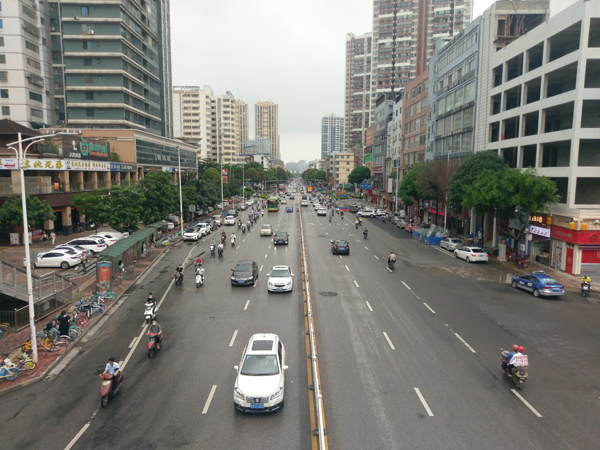
▲The roads are gradually back to normal and busy like they used to be.
If life has a limit and may be forced to end at any time, how am I going to live my life? I’ve got the answer from vision of World Vision that “Our vision for every child, life in all its fullness; our prayer for every heart, the will to make it so.” I should maximize the meaning of my life and try not to leave regrets before death. I want to be able to respond more effectively to the needs of vulnerable children and live a life of my own worth, meanwhile, enabling them to have fullness in their lives. (Written by Huang Simin)