

Compassion and Love Triumphs over a Merciless Outbreak
Rushing to the Frontline of a Disease Outbreak
“January 23 was the day before the Chinese New Year break, it was also the first day of lockdown of Wuhan city. When I arrived at work in the morning, I was told that I have to travel to Wuhan to provide guidance to control the coronavirus outbreak. So, I left for Wuhan city that very day.” said Dr. Xiang Zhun, Head of Information and Medical Service Operations Department of the National Center for Medical Management Service Technical Guidance, National Health Commission.
The next day would have been Chinese New Year Eve, a day where families reunite and enjoy a meal together. Dr. Xiang had originally planned to return to his hometown to spend a week with his family to welcome the spring season. Due to the severity of the situation, he went home to pack and rushed to Wuhan instead.
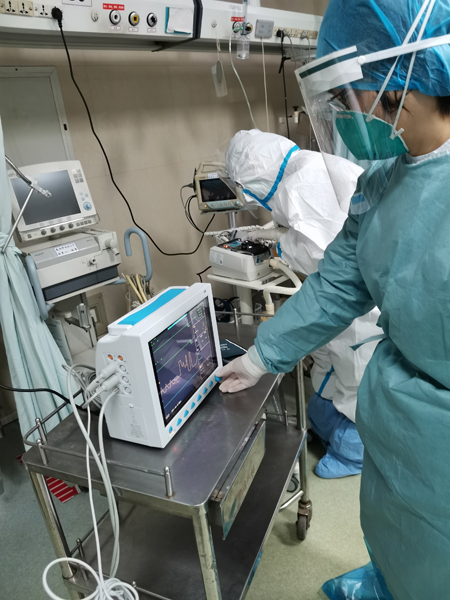
▲Doctors from Tongji Hospital calibrating an electrocardiogram monitor donated by World Vision
A lockdown was imposed on Wuhan city to contain and stop the coronavirus virus from spreading. With the closure of the city on January 23, all public transportation such as buses, subways, ferries and long-distance passenger transportation were suspended, this included stopping trains and air flights from travelling out of the city. As trains and flights between Beijing and Wuhan were also suspended, Dr. Xiang had to first travel to Hefei in Anhui, and then to Wuhan via high-speed train. Dr. Xiang was involved in the SARS epidemic in 2003, and so he was familiar with working in high-risk, intense and strenuous situations. Despite the challenges ahead, his thoughts were focused on containing the outbreak and helping those who had been infected. He arrived in Wuhan at 22:00 on January 23.
While in Wuhan, Dr. Xiang often slept for two to three hours a day. Some days, he only caught an hour of sleep. His responsibilities included managing data collection from nucleic acid amplification testing, overseeing the construction, operation and management of the Dongxihu, Huangpi, Yuanjiatai and Daji makeshift hospitals, as well as organizing the supply and distribution of personal protective equipment to healthcare workers and medical equipment to support the treatment of patients. He also had to coordinate consultations of specialists for critically ill patients. The makeshift hospitals are temporary emergency and clinical facilities that were transformed from buildings with huge space (such as convention centers and stadiums) in order to meet the surge of medical treatment needed during a massive disease outbreak. Dr. Xiang was responsible for the four makeshift hospitals. Under his guidance and management, there were no fatality or accidents among the patients. On top of that, the Dongxihu makeshift hospital received national recognition for its outstanding treatment achievements.
Two makeshift hospitals were specifically used for treating prisoners who had the coronavirus disease. Despite the added pressure of having to manage the treatment of prisoners on top of his existing responsibilities, Dr. Xiang carried out his duties diligently and completed his tasks successfully. The Ministry of Justice sent a letter to the government to express gratitude. Dr. Xiang had indeed made a significant contribution to this.
The Challenges Faced in Wuhan with the COVID-19 Epidemic
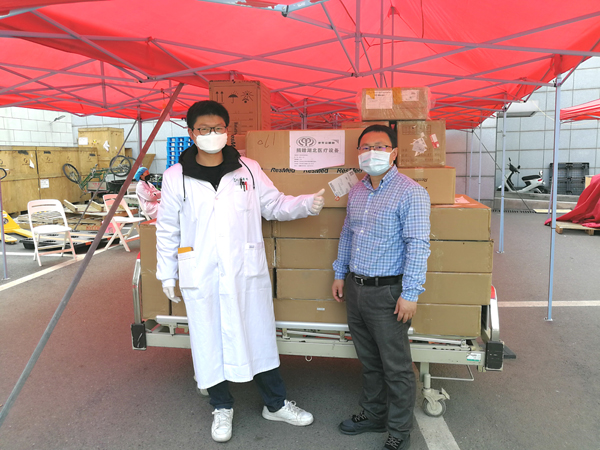
▲ Dr. Xiang (right) from the National Center for Medical Management Service Technical Guidance of the National Health Commission, and Dr. Jiang (left) from the Equipment Division in Tongji Hospital, checking the medical equipment donated by World Vision.
“At the end of January, the COVID-19 outbreak was spreading across the country. The number of people infected by the virus had risen to more than 10,000, with over 7,000 cases in Hubei. Wuhan alone had over 3,000 cases, accounting for a third of the total confirmed cases in the country.” recalled Dr. Xiang.
At that time, there were only two hospitals in Wuhan with less than 1,000 hospital beds to treat infectious diseases. Faced with more than 3,000 patients a day, there was a dire need for more hospital beds, medical equipment, personal protective equipment, and healthcare workers.
Working Together to Overcome Challenges
COVID-19 patients are affected most in their respiratory system, where the virus reduces the function of their lungs. Patients in critical conditions were treated in the hospitals and they needed ventilators to help them breath and maintain blood oxygen levels. Electrocardiogram monitors were essential to monitor patient’s vital signs. It raises the alarm during life-threatening situations so that medical staff can administer timely treatment to the patient.
World Vision has had good working relationships with disease control and healthcare bodies at the national, provincial and county levels. After finding out the need of hospitals in Wuhan, World Vision worked with the China Charity Federation and the National Center for Medical Management Service Technical Guidance of the National Health Commission to provide 30 ventilators, 30 respiratory humidifiers and 24 electrocardiogram monitors to three major hospitals in Wuhan in late March. The three hospitals were Tongji Hospital, the West Campus of Wuhan Union Hospital and Renmin Hospital of Wuhan University.
After receiving the medical equipment, the West Campus of Wuhan Union Hospital wrote in a letter of appreciation: “The equipment donated by World Vision provides a strong assurance for Wuhan to win the battle against the coronavirus.”
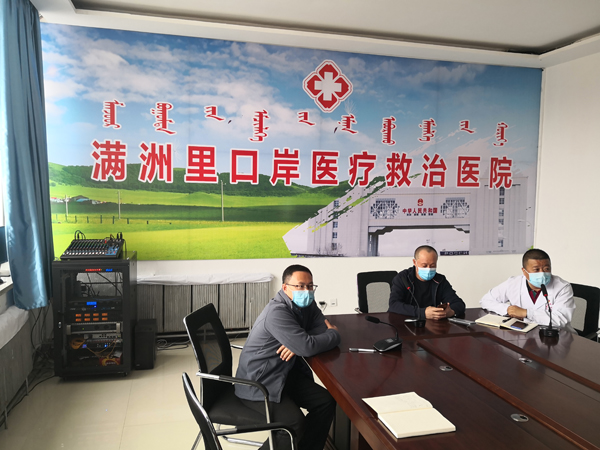
▲Dr. Xiang (in grey) guiding the epidemic prevention and control work in Manzhouli, Inner Mongolia.
“Effective treatment would not be possible without these medical equipment, and so World Vision’s donation during such a critical time was a relief.” said Dr. Xiang. He also added that the support from kind-hearted donors was an important contributing factor to winning the fight against the virus.
With the strong support of the government and the whole country, a total of 86 medical facilities were revamped and 16 makeshift hospitals were constructed in Wuhan within a month, making available over 60,000 beds to treat patients infected by the virus. In addition, more than 42,000 healthcare workers from different parts of the country were mobilized to support frontline work in Hubei.
With the joint efforts of everyone, the outbreak in Wuhan was effectively brought under control. As of May 17, 2020, a total of 46,464 patients were discharged from hospitals in Wuhan.
At the end of April, Dr. Xiang was transferred to Manzhouli in Inner Mongolia to guide work done there to control and prevent the spread of the coronavirus. He shared: “I will go to where the need is. COVID-19 is the most severe disease outbreak that our country has encountered, but it is also a health crisis which we are most successful in containing. I am grateful for the opportunity to work at the frontline and contribute to the stability and development of our society.”
Summer is fast approaching and we are beginning to see beauty again. With the concerted efforts of everyone in the country, we believe we will win over this epidemic eventually.