

We Know How to Wash Our Hands Too!
The COVID-19 pandemic is not over and we must continue to be vigilant.
During this extraordinary time, it is even more important to practice good personal hygiene. In an effort to ensure the well-being of children, World Vision has specially produced an educational video about hygiene practices. This video is being used in four children's welfare institutions and three rehabilitation centers, which World Vision partners with in Guangxi and Tianjin. It promotes the proper way of washing hands, wearing disposable masks, sneezing and other personal hygiene practices that can protect children from germs and viruses, and effectively stop the spread of infectious diseases. Washing our hands is one of the best practices to prevent diseases.
One of the welfare institution in Tianjin takes care of children with disabilities. A simple act like washing hands can be challenging for these children. Their teachers use the video to teach proper hand washing steps, according to each child’s ability. It also makes learning lively and the children can easily pick up the lessons taught.
To suit the children's learning needs, the teachers play the video for ten minutes every day. The animation in the video attracts the children and is able to capture their attention. In the video, the two featured children promotes the importance of hand washing and how it helps prevent one from falling sick. It also uses rhymes and actions to demonstrate the proper way of hand washing. After showing the video, teachers will sing the rhymes and go through the actions with the children again. Although children with Down syndrome have slower speech development and difficulties pronouncing words, they are able to follow the simple and easy-to-remember rhymes. They mimic the actions and learn the steps after the teachers have gone through the routine with them a few times. During their daily activities, teachers also use other ways to teach proper hand washing methods, such as through storytelling or in their daily conversations with the children. Teachers also post pictures of the “Seven steps of hand washing” on the wall in the bathroom, and use the images to guide the children.
Let's practice, “palms, the back of your hands, fingers…” Some children will repeat the rhymes as they wash their hands while some would look at the pictures on the wall, and their teachers will always be nearby to guide them. Six-year-old Nian Nian was born with Down syndrome. In the past, she would just wet her hands and leave. But after watching the video and being constantly reminded by her teachers, Nian Nian would now recite the rhymes as she washes her small hands. When she is done, she proudly lets her teacher check and says: “I've learned how to wash hands too”.
Through this educational video, children now have a better understanding of hand washing and how this practice can prevent germs from being passed on from hand to mount. We hope that all the welfare institutions can work together to promote proper and frequent hand washing to stop the spread of diseases, so that children can grow up healthy and strong. (Written by Xu Wen from World Vision China)
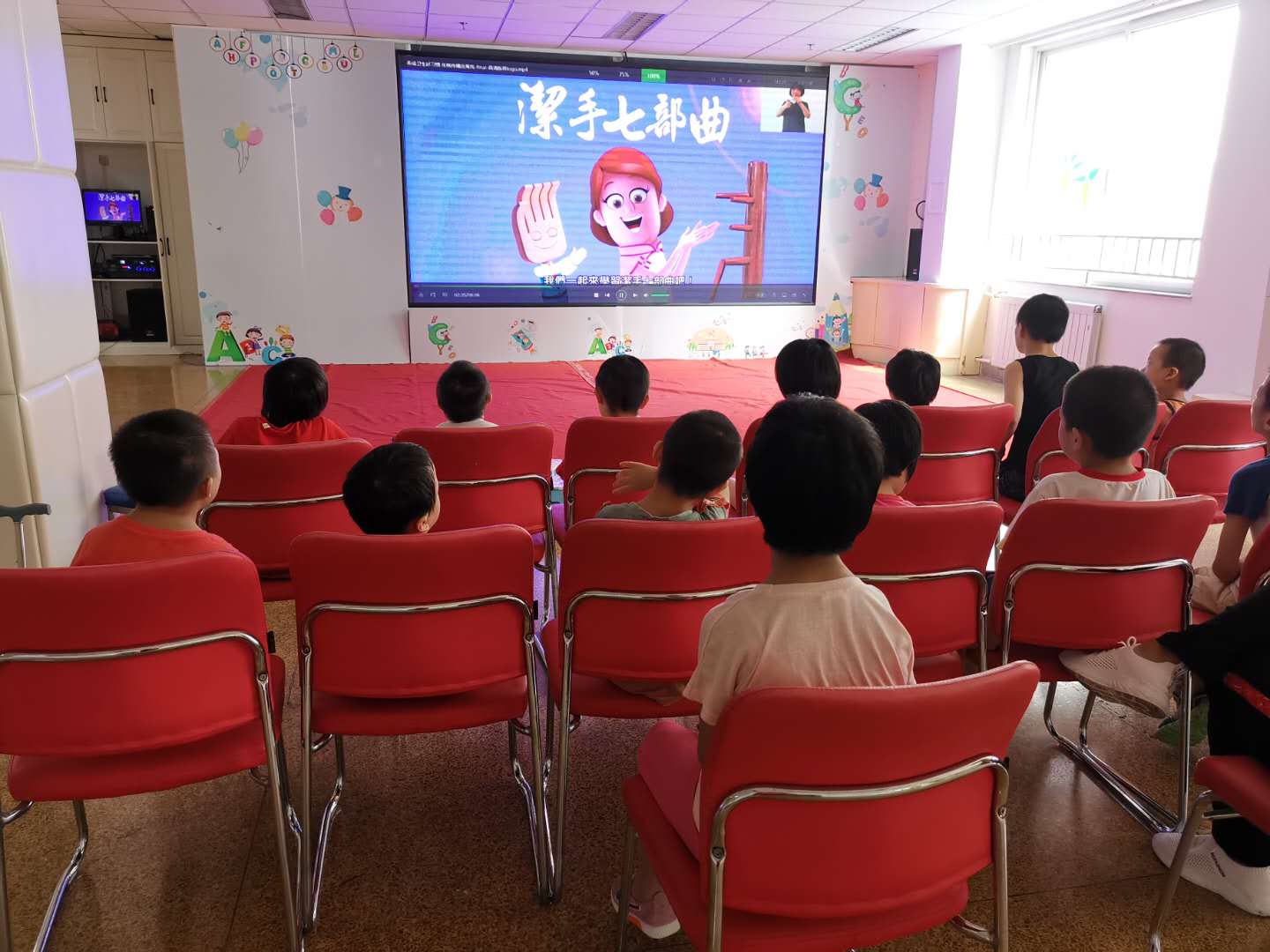
Children watching the educational video about hygiene practices.
.
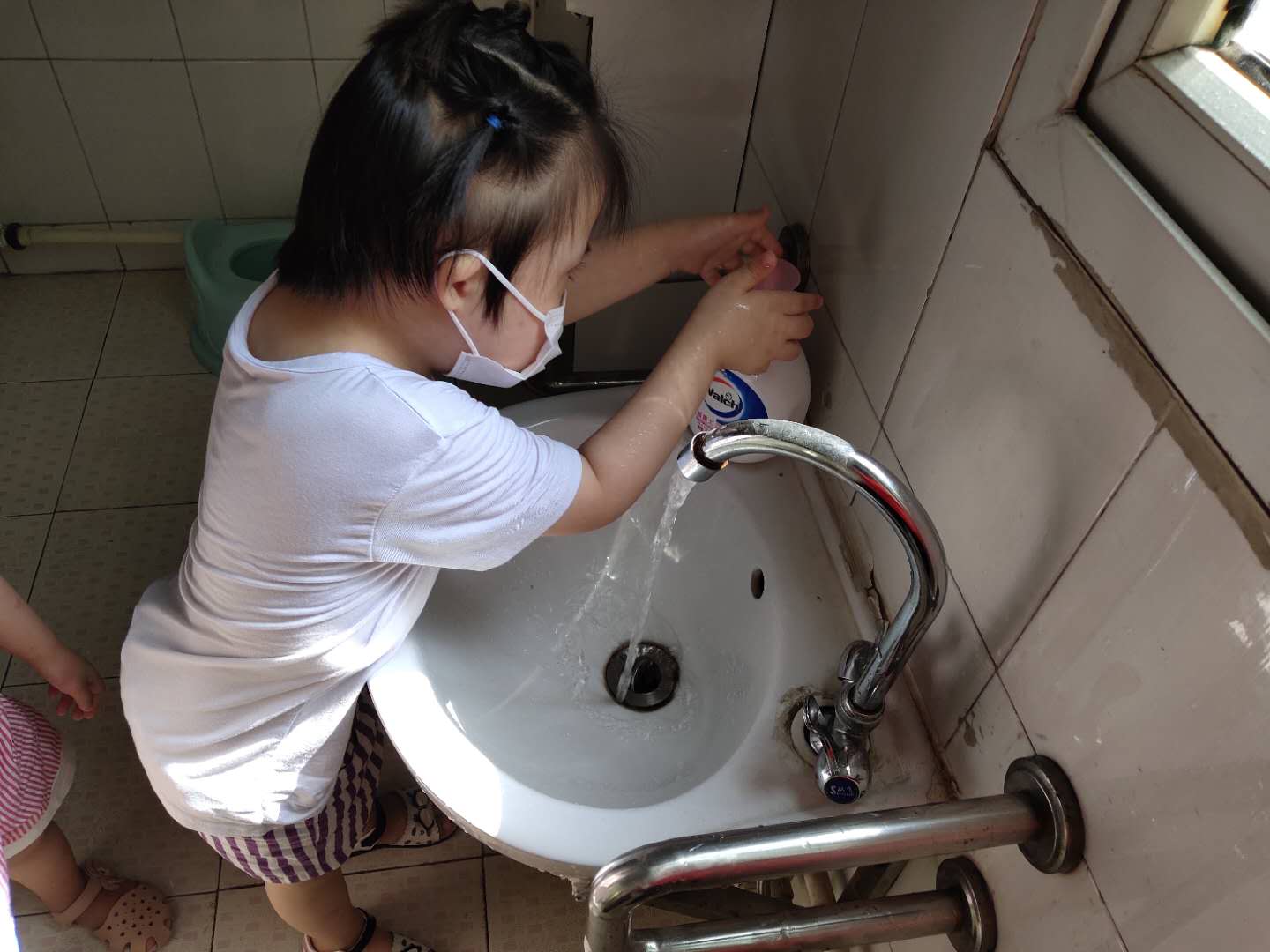
Six-year-old Nian Nian washing her hands following the “Seven steps of hand washing”
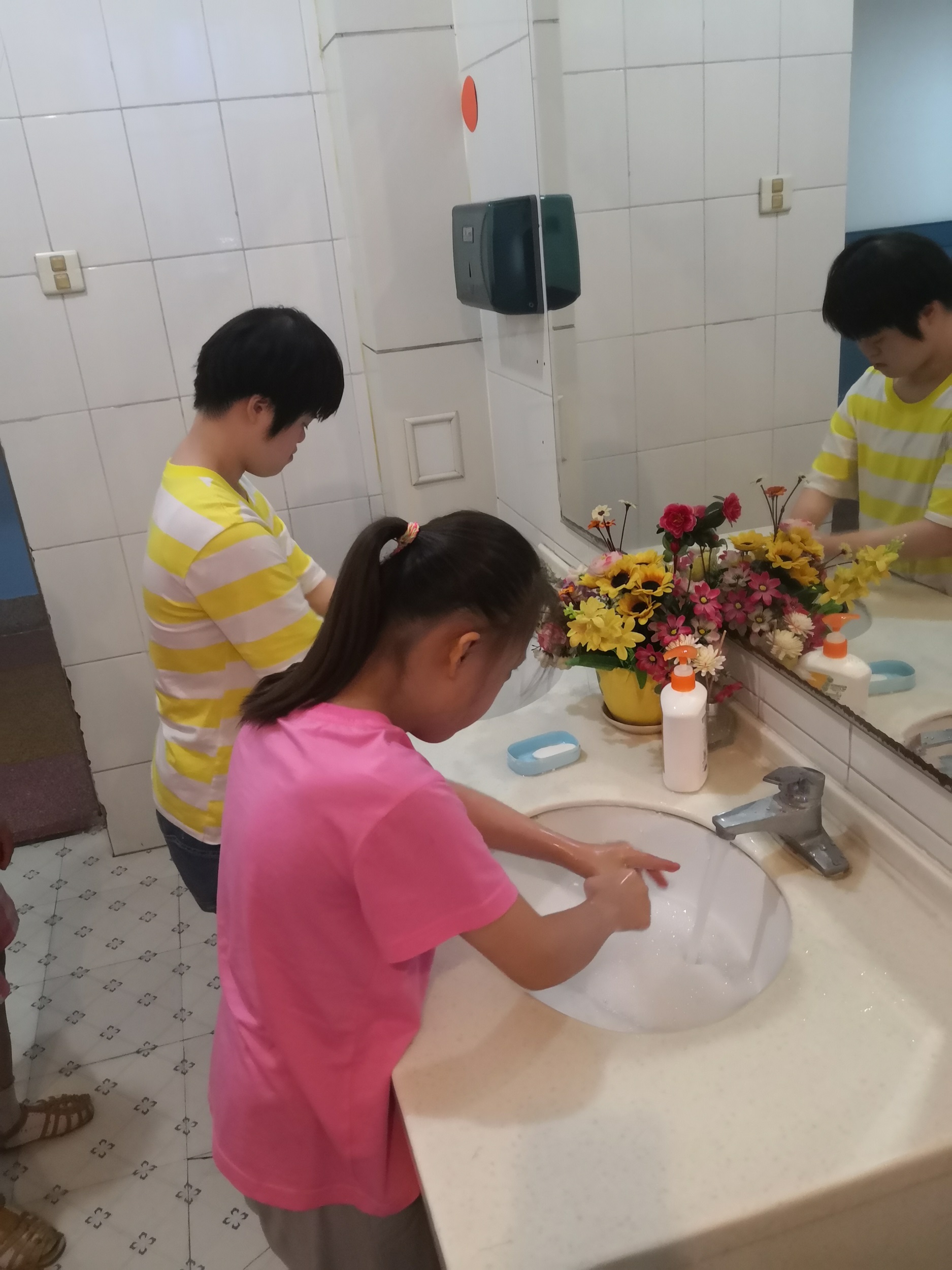
Children washing their hands using the “Seven steps of hand washing”.
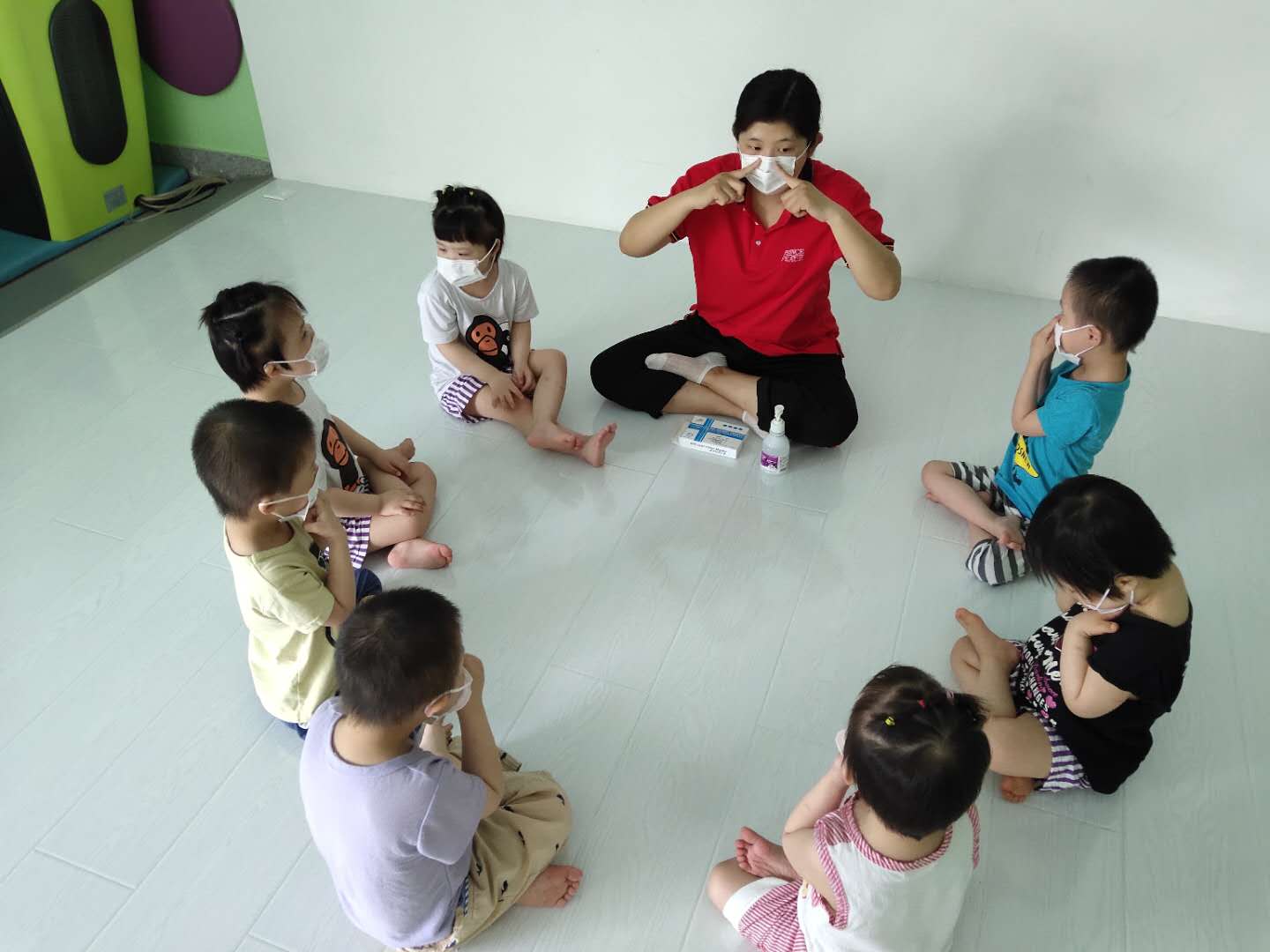
A teacher showing children the correct way to wear disposable masks.