

Restoring Reliable Water in Rural Yunnan
In a small village nestled between the hills of Yunnan, water shapes the landscape, but not always the daily lives of the people who live there.
For decades, a thin network of pipes built in the 1980s carried spring water from two kilometers away into a single storage tank at the edge of the village. From there, water was distributed to homes, schools, and fields. But after more than 40 years, this modest system began to fall apart.
The water, once clear as crystal, turned murky, often carrying insects and leaves. Pipes burst or clogged frequently, with repairs made only as temporary fixes. During the dry season, the situation became critical. For days at a time, taps ran dry.
“When the water stops, everything stops,” a local teacher shared.
For six-year-old Guai, who attends a privately run kindergarten in the village, the water shortage was felt in small but important ways.
“Our hands get dirty,” she said shyly. “The water smells funny, and there isn’t enough for us to use.”
Her teacher constantly reminded the children to conserve water, “use only a little.” But Guai wished things could be different.
Over eight months, World Vision partnered with local authorities and the community to completely overhaul the aging water system.
A new system was installed, including a covered concrete storage tank with sedimentation filters and a network of new pipes. Every household received new taps and water meters, ensuring a more reliable and equitable supply. The improved system would serve approximately 630 people across 144 households in the village.
The change was immediate.
Guai and her friends were among the first to notice the difference.
“The water is so clean, and it doesn’t smell,” she said with a smile. “And we don’t have to wait in long queues anymore to wash our hands.”
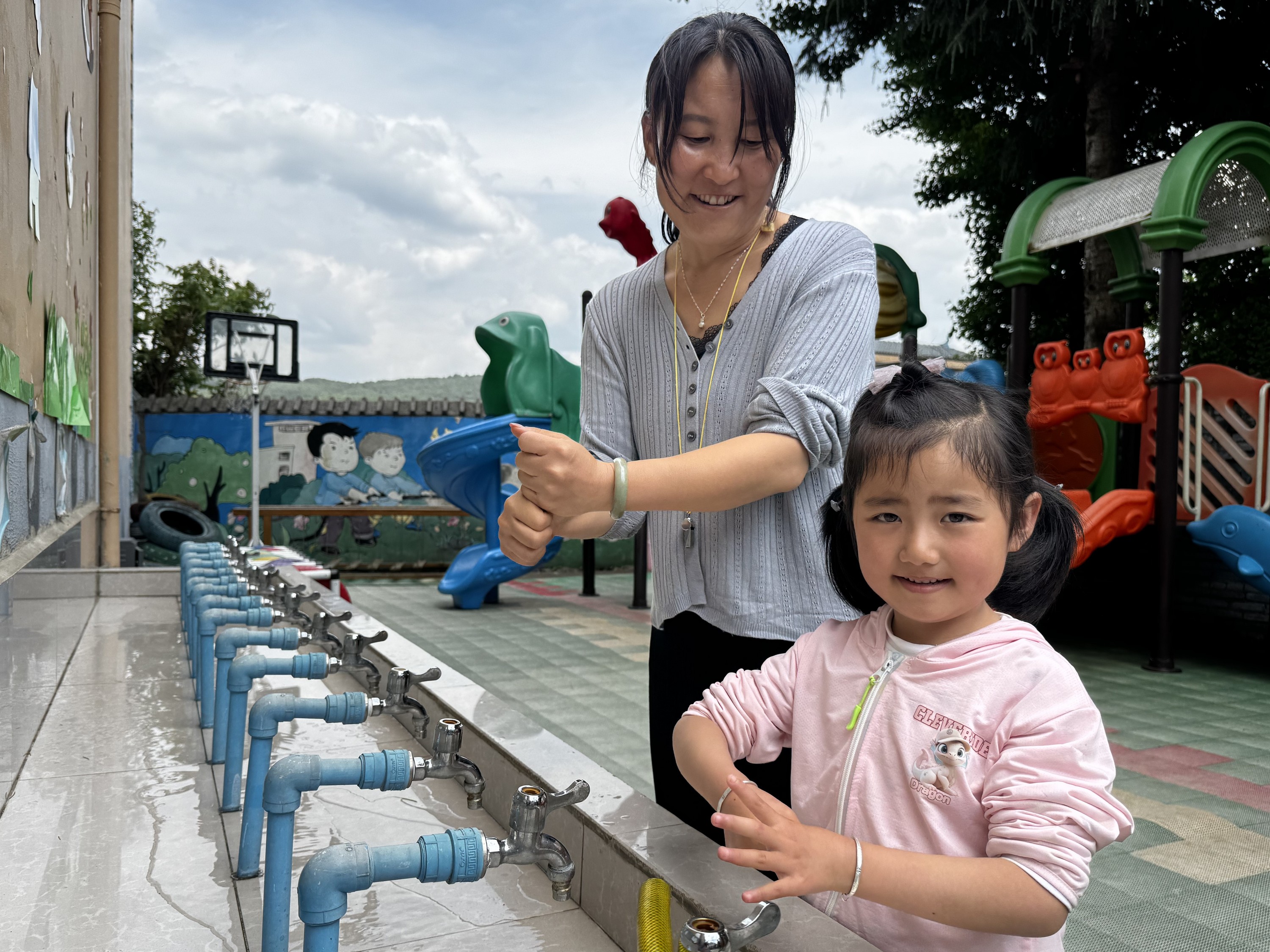
By the sink outside her classroom, Guai washes her hands with her mother. The water is no longer murky.
Her mother gently guides her small fingers through the handwashing steps they had both learned during the health sessions.
“This one,” she says, smiling, “is for the thumb.”
Alongside the infrastructure upgrades, World Vision also conducted community-based health education sessions. Children and caregivers learned about proper hygiene practices and how handwashing can prevent diseases like diarrhea and pneumonia.
Guai quickly mastered the seven steps of handwashing and was even invited to demonstrate them to her classmates.
Her favorite step? Washing between the fingers.
“That’s where all the germs are hiding!” she told her friends with excitement.
Across rural areas, aging infrastructure, geographic isolation, and seasonal water scarcity continue to place pressure on community water systems. In mountainous regions like Yunnan, villages often rely on small, decentralized systems that require regular upgrading and maintenance.
Reliable access to clean water plays an essential role in supporting health, education, and everyday life. Combined with improved hygiene practices, safe water helps reduce illness and creates a better environment for children to learn and grow.
World Vision’s integrated approach—combining infrastructure improvements with community health education—helps ensure these changes are lasting, equipping communities to manage and protect their water systems.
Today, clean water flows reliably through the village, bringing greater stability to daily life and supporting healthier futures for children like Guai.